North Idaho · Bonner County

Roofing in Cocolalla, Idaho

Frame Restoration Idaho serves Cocolalla — an unincorporated Bonner County community around Cocolalla Lake south of Sandpoint — about 13 miles from our Sandpoint office. We handle roof replacement, repairs, new construction roofing, storm damage mitigation, and routine maintenance built for rural access, wooded shade, drifting snow, lake moisture, detached structures, and long roof drainage paths. Call for a free estimate.

Area
Bonner County
From Sandpoint
About 13 miles
Estimates
Free

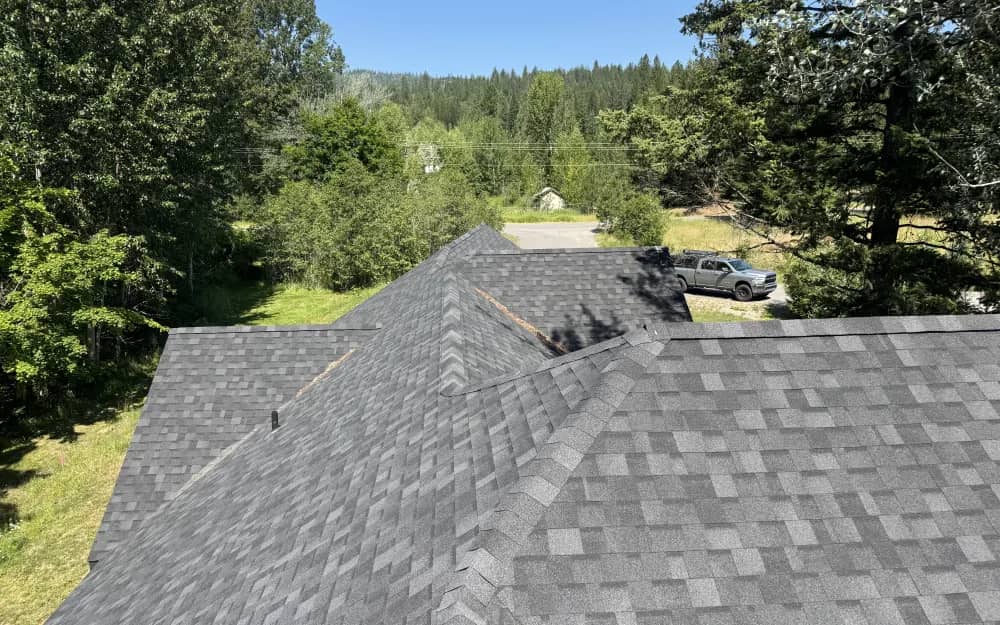
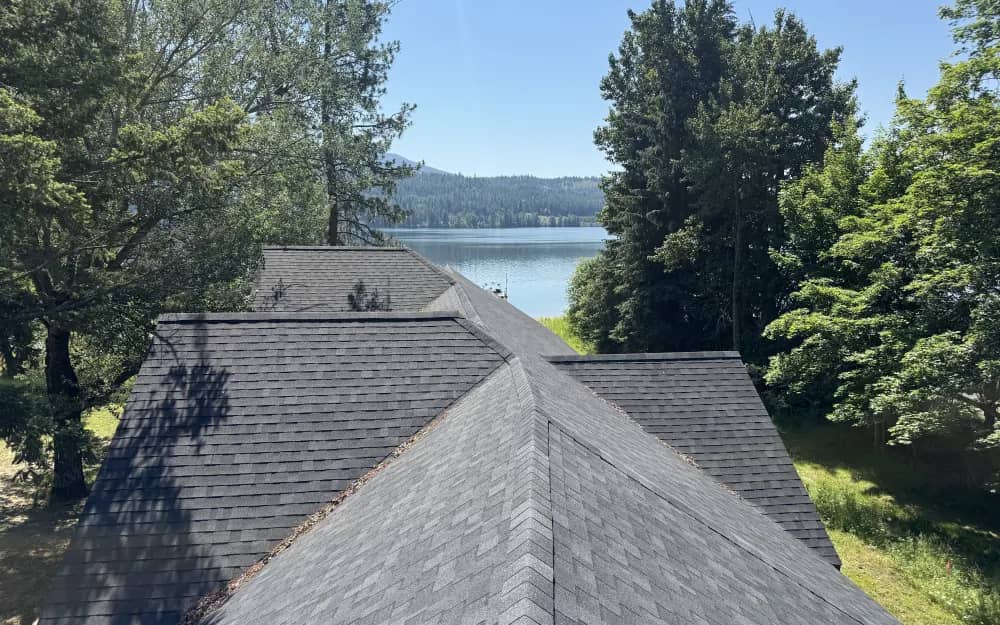
Roof photos from Cocolalla, Idaho

Shingle roof in Cocolalla

Two views of an asphalt shingle roof in Cocolalla, Idaho.

View project gallery
Elevated view of gray asphalt shingles and intersecting roof planes near Cocolalla, Idaho
Cocolalla roof photoAsphalt shingle roof — Cocolalla, ID
Elevated view of a gray asphalt shingle roof with Cocolalla Lake and forest in the distance
Cocolalla roof photoAsphalt shingle roof — Cocolalla, ID

Roofing in Cocolalla

Roofing for Cocolalla acreage and lake-country homes

Cocolalla combines wooded acreage, open fields, lake-adjacent homes, gravel approaches, and rooflines that may serve several detached structures on one property. An estimate is clearer when it separates the house, garage, shop, porch tie-ins, tree exposure, drainage, and safe material staging.

Roof replacement, repair, new construction roofing, storm-damage response, routine maintenance, inspections, and roofing material planning — scoped for Bonner County snow, wind, and freeze-thaw. We serve Cocolalla and the surrounding Bonner County area. Call (208) 597-7712 for a free estimate.

Start a Cocolalla roof request

Tell us about your roof and we'll follow up with a free estimate.

What happens next: a Frame Restoration Idaho team member reviews your details and follows up to scope the work and set up your free estimate. Prefer to call? Reach us at (208) 597-7712.

Local roof evidence

What a Cocolalla inspection should verify

A Cocolalla assessment should inventory every roofed structure, shaded valley, porch or addition tie-in, and the path used by snowmelt around the house. Rural driveways, gravel approaches, trees, overhead lines, wells, septic areas, and landscaping can also affect delivery and staging even when the roofing scope itself is straightforward.

Source-backed winter context

A National Weather Service event record reports 9 inches to a foot of snow at Sandpoint during a December 2008 Inland Northwest storm.

Snow accumulations ranged from 9 inches to a foot at Hauser, Spirit Lake, Athol and Sandpoint.Source: National Weather Service Spokane weather history
  1. Source 1

    Cocolalla land-use context

    Bonner County planning records describe Cocolalla as an unincorporated rural-residential area with a mix of paved and private gravel access.

    Open official source
  2. Source 2

    Bonner County planning

    Use the county's current planning and hazard resources to confirm the parcel jurisdiction and site constraints before work is scheduled.

    Open official source
  3. Source 3

    National Weather Service record

    NWS Spokane's Inland Northwest weather history documents heavy-snow and wind events affecting North Idaho roofs and access.

    Open official source

Cocolalla roof planning guide

Build the scope around rural access, trees, lake moisture, and every structure

Cocolalla is an unincorporated Bonner County community where wooded acreage, open fields, Cocolalla Lake, private drives, and detached buildings can all appear in one roofing request. The roof assessment should start with a property inventory and a safe access plan. Then it can evaluate covering, deck, underlayment, flashing, ventilation, drainage, tree exposure, snow behavior, and the connections between original construction and later additions.

Cocolalla roof replacement planning

Cocolalla replacement planning should identify whether the project covers only the residence or also a garage, shop, cabin, porch, or breezeway. Different structures may have different deck, ventilation, pitch, and material requirements. The estimate should describe delivery on the rural approach, protection around wells, septic areas and landscaping, debris containment, and how valleys or low-slope tie-ins will be rebuilt so the finished system sheds rain and snowmelt as one design.

  • Separate the finished roofing material from deck, flashing, ventilation, edge, valley, and penetration work.
  • Record the Cocolalla property conditions that change staging, protection, drainage, or winter detailing.
  • Define what can be priced now and what can only be confirmed after tear-off or closer inspection.
Review the complete service guide

Cocolalla leak and repair tracing

A leak on a wooded Cocolalla property may begin with branch impact, debris held in a valley, a failed pipe boot, a porch connection, wind-lifted material, or snowmelt above an eave. The visible stain may sit far from the opening. Repair work should document the roof plane, nearby trees, recent weather, drainage path, and connected additions, then state what material must be removed and restored to reach the source.

  • Note when the symptom appears and which weather direction or thaw cycle was present.
  • Trace likely entry points above and beside the visible interior stain instead of sealing the stain location.
  • Explain the repair boundary, surrounding material condition, and signs that would justify broader work.
Review the complete service guide

Cocolalla storm and snow review

After wind, heavy snow, or a falling limb, photograph what can be seen from the ground and note blocked driveways, downed lines, damaged trees, or changes at ridges and roof edges. Rural response begins with safe access. The inspection should check occupied buildings first, then detached structures, gutters, penetrations, and debris collection points. Emergency covering should not require a homeowner to cross an icy field or climb a damaged roof.

  • Prioritize active water entry, displaced material, fallen limbs, roofline movement, and interior safety.
  • Use dated ground-level and interior photographs to preserve the condition without unsafe roof access.
  • Separate temporary protection from the permanent repair or replacement scope.
Review the complete service guide

Cocolalla condition inspection

A Cocolalla inspection report works best as a structure-by-structure record. For each roof, note covering type, pitch, age if known, penetrations, flashing, deck clues, ventilation, drainage, branch exposure, and urgency. Include photographs that establish location rather than a folder of unlabeled close-ups. The final recommendation can then separate routine cleaning, a focused repair, monitoring, and replacement across the property.

  • Start with a defined question: leak source, storm effect, maintenance need, or repair-versus-replacement.
  • Tie findings to roof planes, transitions, drainage paths, attic observations, and accessible photographs.
  • Leave the homeowner with a next decision and unresolved items, not only a pass-or-fail label.
Review the complete service guide

Make the next decision clearer

What to evaluate before approving a scope

Read the Cocolalla property before the roof

Walk the property from the road before focusing on shingles. Note private or shared access, gravel grade, soft shoulders, gates, overhead limbs, power lines, wells, septic areas, animals, stored equipment, and buildings hidden from the main drive. Map where snow slides or runoff lands. Those conditions affect crew safety, material staging, protection, and the order in which roof planes or separate structures should be opened.

Connect weather exposure to roof geometry

Wooded shade can keep one roof damp or snow-covered after an open roof has dried. Open fields can increase drifting and wind pressure. Lake-adjacent properties may see more moisture, while uphill lots may shed water toward additions or lower buildings. Record the actual exposure for each structure. Cocolalla is not one uniform microclimate, so recommendations should follow the site evidence instead of the community label.

Plan access, staging, and cleanup

Confirm road and driveway condition for delivery vehicles, turning space, bridge or culvert limits if known, winter plowing, gate dimensions, and where removed material can be contained. Plan around wells, septic components, gardens, livestock, and outbuildings that must stay accessible. If the site cannot support a large delivery at once, the scope should allow staged materials rather than improvising after the crew arrives.

Compare proposals on the same scope

Compare Cocolalla proposals by the exact structures included and by roof-system components: removal, deck review, underlayment, flashing, ventilation, penetrations, edges, transitions, disposal, and site restoration. Ask whether tree trimming, snow retention, gutter work, or low-slope membranes are included or excluded. Written limits matter on acreage because work near the house can easily be confused with work on a connected porch or nearby garage.

Information to gather before a Cocolalla estimate

Prepare a list of buildings, roof materials, known ages, leak dates, past repairs, attic access, seasonal occupancy, and any interior area that cannot be entered. Share a simple property map, driveway notes, gate size, overhead restrictions, animals, wells, septic areas, and places that become soft during rain or thaw. Ground-level photographs from several sides help connect the request to the right roof plane before the visit.

Safety and urgency notes

Keep away from fallen limbs, sagging roof sections, wet electrical service, damaged outbuildings, and snow sliding from metal or steep roofs. Rural isolation is not a reason to attempt a temporary patch from a ladder. Mark leaks indoors, move belongings only when the room is safe, and preserve access for emergency or service vehicles. A professional can determine whether immediate covering or a scheduled inspection is appropriate.

Nearby service guides

Also serving near Cocolalla

View all 24 communities

Questions from Cocolalla homeowners

Frequently asked questions

Do you provide roofing service in Cocolalla, Idaho?
Yes. Frame Restoration Idaho serves Cocolalla in Bonner County and communities across the North Idaho Panhandle. Cocolalla is 13 miles from our Sandpoint office, well inside the area we cover. Call (208) 597-7712 for a free estimate.
What roofing work does Frame Restoration Idaho do in Cocolalla?
Roof replacement, roof repairs, new construction roofing, storm damage mitigation, routine maintenance, roof inspections, and roofing material planning — all scoped for rural access, wooded shade, drifting snow, lake moisture, detached structures, and long roof drainage paths.
How does North Idaho winter weather affect roofs in Cocolalla?
Cocolalla combines wooded acreage, open fields, lake-adjacent homes, gravel approaches, and rooflines that may serve several detached structures on one property. An estimate is clearer when it separates the house, garage, shop, porch tie-ins, tree exposure, drainage, and safe material staging. We scope every Cocolalla roof with rural access, wooded shade, drifting snow, lake moisture, detached structures, and long roof drainage paths in mind, from underlayment and ventilation to snow-shedding and flashing details.
How do I get a free roofing estimate in Cocolalla?
Call (208) 597-7712, or send your details through the form on this page. We follow up to scope the work and give you a clear, free estimate — no pressure.
What should I share before a Cocolalla roof estimate?
Share every structure included, roof materials and ages if known, leak timing, prior repairs, driveway and gate conditions, overhead obstructions, animals, wells or septic areas near staging, and ground-level photos from several sides. Rural access and property layout can change delivery, protection, cleanup, and the order of work.

Free estimate

Ready to talk about your roof?

Tell us where the problem is, what you're seeing, and whether you have photos. We'll follow up with next steps and a free estimate. Call (208) 597-7712 or send the details online.

Based in Sandpoint, ID

Get a Free Estimate